
“For which of you, intending to build a tower, sitteth not down first, and counteth the cost?” — Luke 14:28
In business, many people work hard but struggle to turn their efforts into consistent results. Often, what is missing is a disciplined approach to the five basic functions of management.
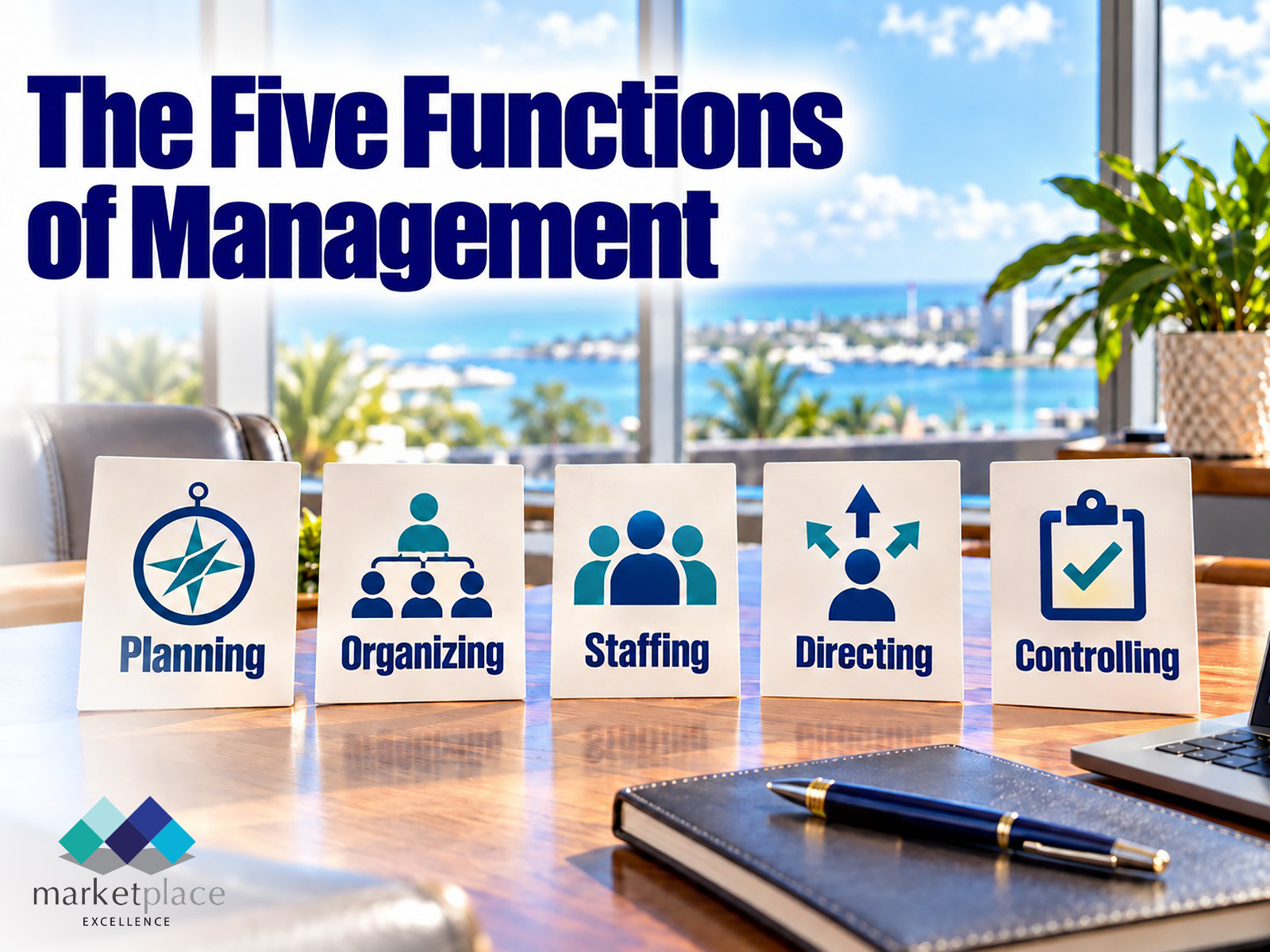
Building on principles developed by Henri Fayol more than a century ago, the framework used here comprises planning, organizing, staffing, directing and controlling. Together, these functions provide a practical foundation for effective management and support good corporate governance.
1. Planning: This is deciding in advance what needs to be done, why it matters and when it should happen. Planning sets objectives and charts a course from where you are to where you want to be. It also identifies the resources required. Without planning, you risk having activity without direction.
2. Organizing: This is arranging work, people and resources to carry out the plan. It involves dividing work into tasks, grouping related activities, assigning responsibilities and establishing reporting relationships. Even in a small business, everyone should understand their role and how it connects to the work of others.
3. Staffing: This is putting the right people in the right jobs and helping them succeed. It includes recruitment, selection, training, development and performance appraisal. Many businesses organize well but staff poorly, and they pay the price. A sound structure cannot compensate for people who lack the skills or support to do their jobs.
4. Directing: This is leading people to put the plan into action. It includes motivation, communication and supervision. Employees need clear expectations, timely guidance and constructive feedback. A plan has little value if the people responsible for delivering it do not understand what is expected of them.
5. Controlling: This is checking whether what was planned is actually happening. It involves setting standards, measuring performance, comparing results with expectations and taking corrective action. Controlling closes the loop: it helps you identify what is working, what is falling short and what needs to change.
Think of the business as a journey. Planning sets the destination. Organizing prepares the vehicle. Staffing assembles the right crew. Directing keeps the crew moving together. Controlling checks progress and prompts course corrections.
These functions also give owners and boards a useful governance checklist: Is there a clear plan? Are responsibilities defined? Do we have the right people? Are they receiving effective leadership? Are we measuring results and acting on what we learn?
When any one function is weak, the business becomes harder to guide and hold accountable. When all five work together, hard work has a better chance of producing sustainable results.
Dr. Basil Springer, GCM, is a corporate governance adviser. His columns may be found at www.nothingbeatsbusiness.com.