
“Each of you should use whatever gift you have received to serve others, as faithful stewards of God’s grace in its various forms.” — 1 Peter 4:10
In my May 15 column, “Govt’s First: Strengthen Barbados SOEs,” I wrote: “In Singapore, ministers select CEOs for their professional competence, and CEOs, in turn, choose board chairs and members who support the state-owned enterprise’s mission.”
Reader Timothy P. Adam of TPA Consulting rightly clarified that this applies only to Singapore’s Statutory Boards — government agencies — and not to government-owned companies.
For companies operating under the Companies Act, Singapore follows global best practice: Temasek, as the shareholder, appoints the board and its chair. The board then appoints the CEO. Ministers do not select the CEO directly.
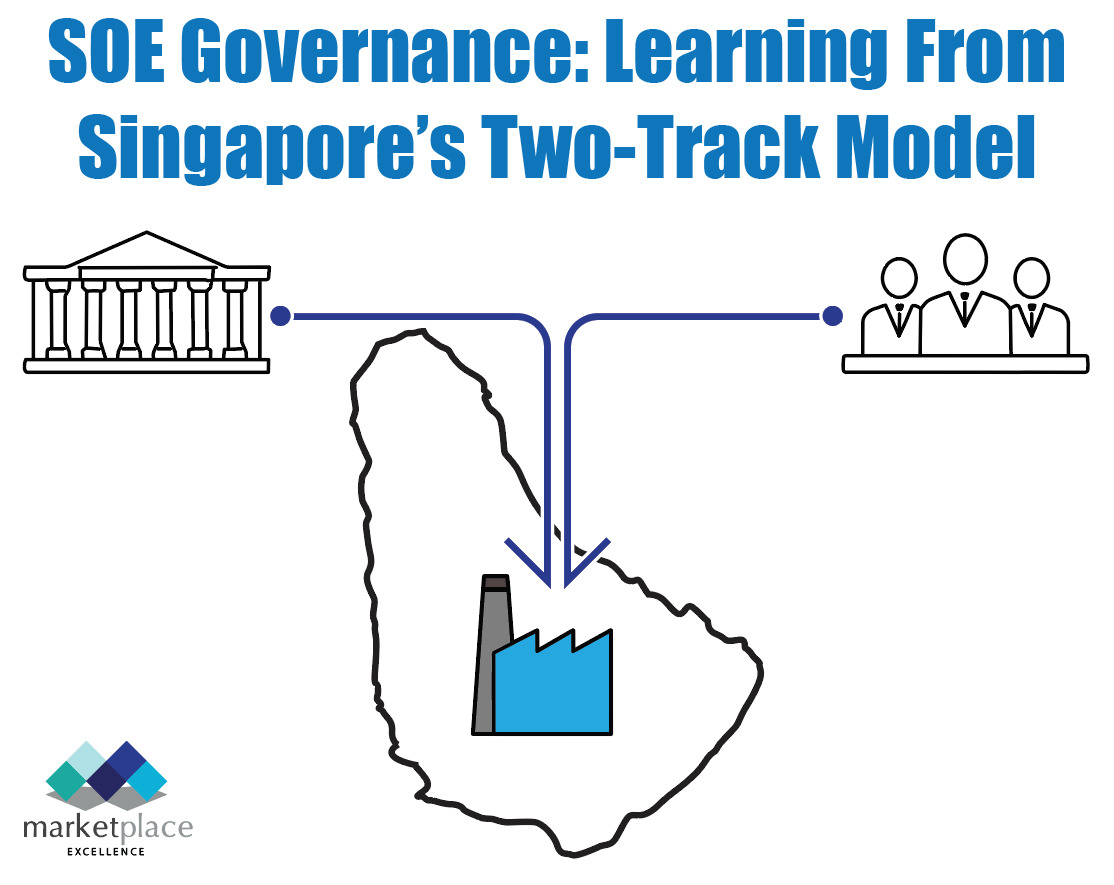
Timothy’s clarification is important for Barbados as we seek to strengthen our state-owned enterprises. Singapore succeeds because it distinguishes between agencies and companies, governing each under the appropriate framework.
Government agencies, or Statutory Boards, deliver public services, use public funds and report to a minister. In such cases, ministerial appointment of the CEO can be appropriate, provided it is based on transparent competency criteria and fixed-term contracts rather than political considerations. The board’s role is then to support the CEO in delivering the statutory mandate.
Government-owned companies, by contrast, compete in the marketplace and must be commercially viable. They should therefore operate under the Companies Act. The shareholder — in Singapore’s case, Temasek — appoints an independent board, and the board, not the minister, hires the CEO. This structure protects the company from political interference while holding the board accountable for performance.
For Barbados, rationalization means matching governance structures to organizational purpose. Where an entity is a true public agency, there should be a clear competency framework for selecting its CEO. Where it is a commercial SOE, there should be an arm’s-length shareholder model, professionally constituted boards and CEO selection by the board itself.
Examples of Barbados government agencies and Statutory Boards include the Barbados Water Authority, Transport Board, Barbados Tourism Marketing Inc., Barbados Agricultural Management Company, National Conservation Commission, Queen Elizabeth Hospital, Barbados National Standards Institution, Fair Trading Commission, Financial Services Commission, Town and Country Development Planning Office, Sanitation Service Authority and National Housing Corporation. These organizations deliver mandated public services and operate under ministerial oversight.
Commercial SOEs, such as Barbados National Oil Company Ltd., Barbados Investment & Development Corporation Ltd. when operating as a company, and Port St. Charles Ltd., are better governed under company law with independent boards and clear lines of accountability.
The first step is clarity: Is the entity an agency or a company? The second is ensuring that appointments are based on competence, not connections. That is how Barbados can build state-owned enterprises that deliver value to citizens and strengthen national development.
Dr. Basil Springer, GCM, is a corporate governance adviser. His email address is basilgf@marketplaceexcellence.com. His columns may be found at www.nothingbeatsbusiness.com.