“Do not despise these small beginnings, for the LORD rejoices to see the work begin.” — Zechariah 4:10
In 1976, E.F. Schumacher delivered the inaugural Sir Winston Scott Memorial Lecture at the Central Bank of Barbados. His topic was Independence and Economic Development. Three years earlier, he had published his influential book Small Is Beautiful: Economics as if People Mattered.
Half a century later, as a new world economic order reshapes trade, finance and supply chains, Schumacher’s message to small states is more relevant than ever.
He spoke to us at the dawn of independence and cautioned that pursuing “big development” could leave small nations vulnerable. Today, that warning has become reality.
Small states, by their very nature, have limited land, populations and natural resources. We depend heavily on imports for food, fuel, goods services and even financial resources. That dependency is unlikely to disappear. What must change, however, is our efficiency. In this new economic order, the old assumption that “big is powerful” has been replaced by a new reality: “efficient is powerful.”
Where are we now? Too many of us continue to pursue headline-grabbing projects while neglecting the fundamentals. Weak export pipelines, rising import bills, governance deficiencies and public-private partnerships that serve interests rather than people continue to undermine progress. We cannot control global markets, but we can control how prepared we are to compete within them.
Success in this environment requires three stellar standards — the very principles Schumacher was advocating in 1976:
1. Stellar Productivity
Every foreign exchange dollar, each financial investment, every acre of land and every hour of talent must be optimized.
The 3M Shepherding Model offers a practical framework. Metamorphosis transforms raw ideas into bankable export proposals. Rather than relying solely on external financing, capital can be mobilized locally to fund production, certification, branding and market entry, creating a stronger foundation for sustainable economic growth.
Management, through Shepherding — the combination of life coaching and business mentoring — supported by pooled assets such as the ManOBiz Matrix, helps de-risk investment and protect equity.
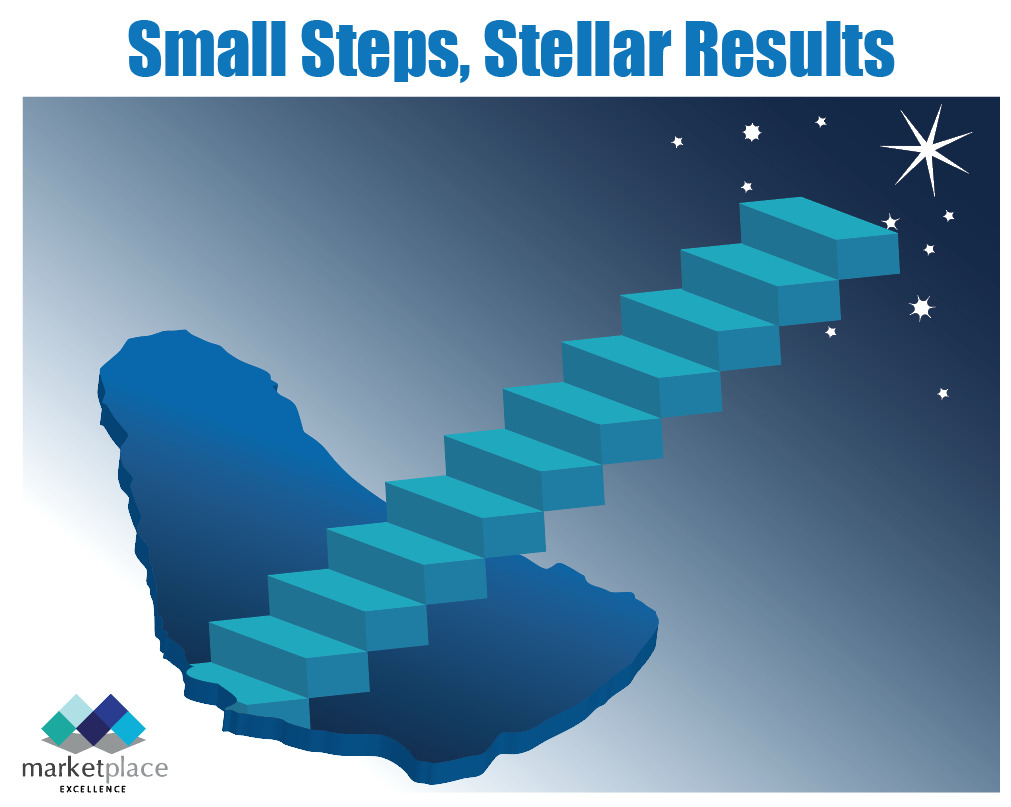
Small steps, consistently applied, produce remarkable results.
2. Stellar Governance
Transparent procurement, efficient business registration systems and respect for contracts are essential. Investors place their confidence in systems, not speeches.
3. Stellar Public-Private Partnerships
The government must create enabling conditions and reduce risk. The private sector must deliver innovation and execution. Both must share data, accountability and a commitment to national development. Silos are no longer an option.
Urgent Actions
1. Refine, don’t just produce. Use HIGS-type workshops to transform ideas into export-ready proposals. Quality beats quantity.
2. Fix the fundamentals. Make it easier to do business.
3. Identify three to five winnable sectors — such as agro-processing, the creative industries, the blue economy and digital services — and shepherd them relentlessly.
4. Mobilize local savings to establish and capitalize an equity investment fund that supports productive enterprise and economic growth.
5. Partner strategically with larger economies to access their markets while preserving our own development priorities.
Schumacher argued that small is beautiful because it promotes human compatibility, resilience, adaptability and efficiency. For small states navigating a rapidly changing world order, being small is not a disadvantage to overcome but a strategic advantage to embrace.
Beauty, in this sense, is not optional; it is strategy.
We heard Schumacher’s message in 1976. The question for 2026 is whether we are finally prepared to act on it.
Dr. Basil Springer, GCM, is a corporate governance adviser. His email address is basilgf@marketplaceexcellence.com. His columns may be found at www.nothingbeatsbusiness.com.