
“When you build a new house, make a parapet around your roof so that you may not bring the guilt of bloodshed on your house if someone falls from the roof.” – Deuteronomy 22:8
A knife is among humanity’s oldest tools — capable of preparing a nourishing meal or inflicting grave harm. Its value has never been in question; rather, its use has. Today, Artificial Intelligence (AI) presents a similar paradox. It stands as one of the most transformative innovations of the information age, yet it carries a quiet concern: are we sharpening our productivity at the expense of our thinking?
On one hand, AI is undeniably an efficient tool. Like the calculator, the spreadsheet and the search engine before it, AI reduces friction in our daily tasks. It accelerates research, enhances decision-making and frees up time for higher-level pursuits. In business, education and governance, AI can elevate performance and unlock new possibilities. To ignore these benefits would be to resist progress itself.
On the other hand, emerging literature warns of “cognitive atrophy” — a gradual decline in critical thinking and problem-solving skills due to overreliance on intelligent systems. When individuals outsource too much thinking to machines, they risk weakening the very mental muscles that drive innovation and judgment. The concern is not entirely new; similar fears accompanied past technologies. Yet AI’s sophistication raises the stakes, as it does not merely assist thinking — it can replace significant portions of it.
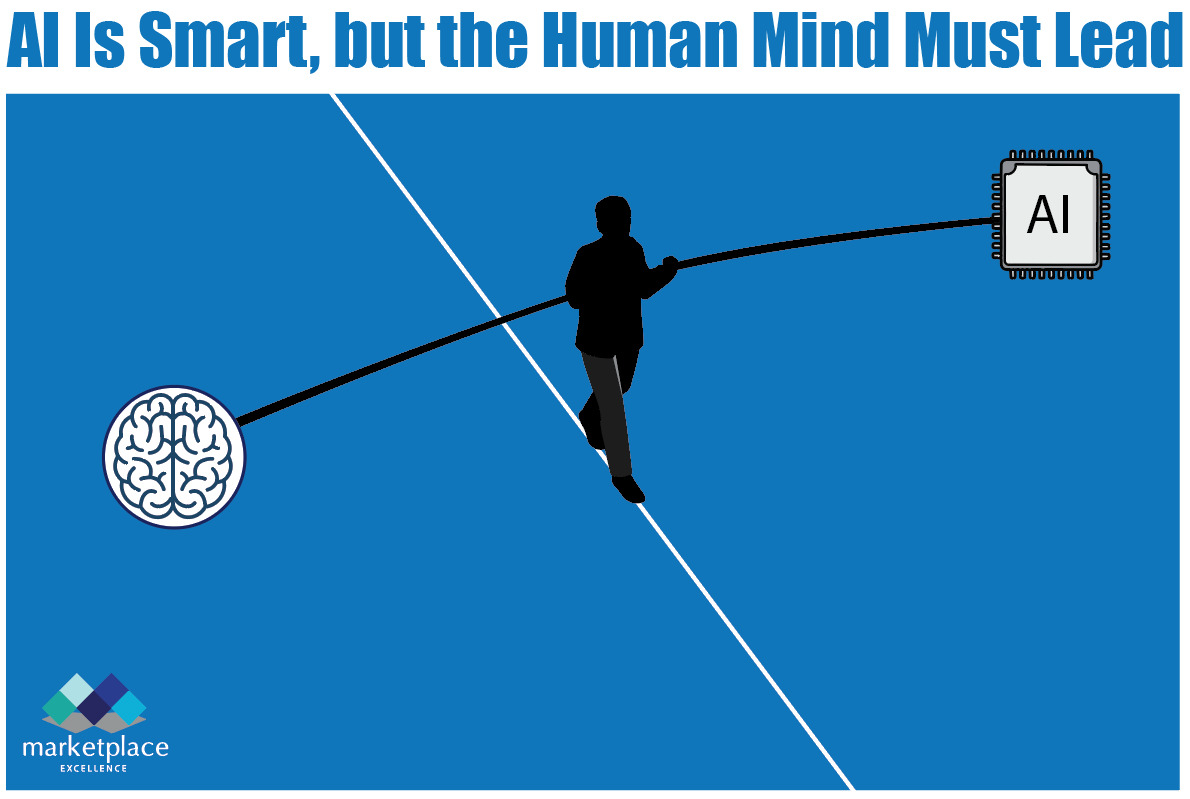
So how do we reconcile these positions? The answer lies not in rejecting AI, but in redefining our relationship with it. AI must remain a tool, not a crutch. Just as a knife requires skill and discipline, AI demands mindful usage. We must intentionally engage our reasoning, question outputs and preserve spaces for independent thought. Importantly, using AI effectively still requires intelligence, judgment and discernment — it is not a substitute for thinking, but a system that rewards those who know how to think well. The human mind must remain actively engaged, guiding the technology rather than being guided by it. Education systems, in particular, must adapt — teaching not just how to use AI, but how to think alongside it.
Dr. Basil Springer GCM is a corporate governance adviser. He can be reached at basilgf@marketplaceexcellence.com. His columns may be found at www.nothingbeatsbusiness.com .