“Commit to the Lord whatever you do, and He will establish your plans.” — Proverbs 16:3
If Singapore teaches us anything, it is that national development is not powered by policy documents alone, but by connectivity, openness, reliability and enterprise development (C.O.R.E.) that convert vision into value.
In both Barbados and Trinidad and Tobago, we have spoken eloquently about diversification, innovation and entrepreneurship, yet enterprise development itself remains the most under-engineered pillar of our economic strategy.
Small Island Developing States (SIDS) are uniquely positioned to compete globally — not through size, but through agility, creativity and niche excellence.
Yet across the Caribbean, enterprise development is often reduced to grant programmes, training workshops or well-meaning incubators which bolster the MSME environment but rarely produce export-ready firms.
Too often, we celebrate start-ups without building the systems that allow them to scale, survive and compete internationally.
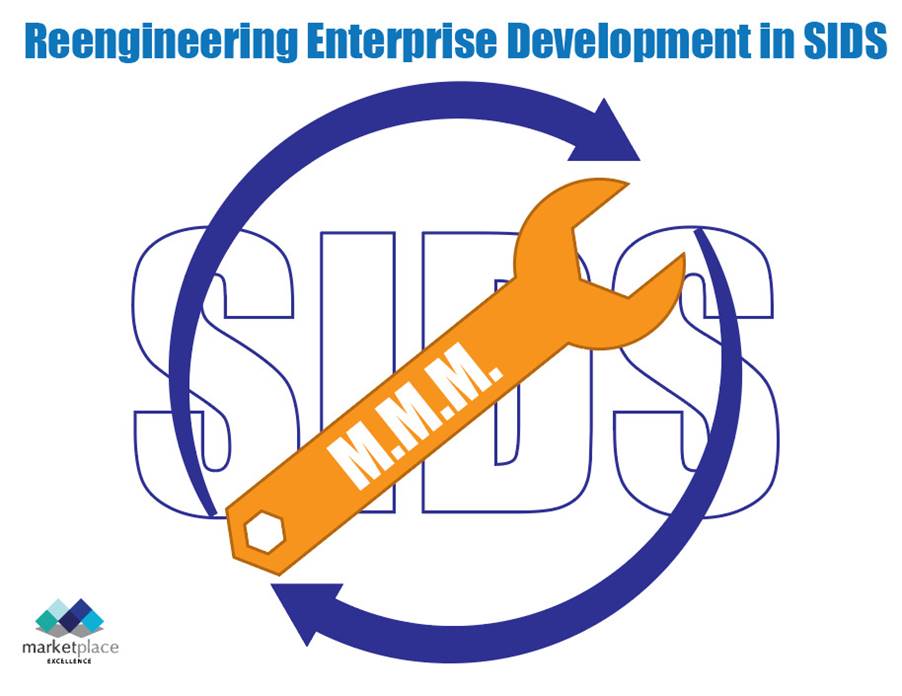
This is where my 3M Shepherding Model becomes both relevant and necessary.
First, Metamorphosis. Successful enterprise development begins with a shift in mindset — from smallness to global ambition. I often describe this as creating the “DNA of an elephant” in a start-up: enterprises must be conceived from day one as export-oriented, globally competitive ventures whose markets lie beyond our shores. Only then does the global marketplace pay for our development.
Second, Money. Traditional debt financing (loans) suffocates young enterprises. What SIDS need is patient, intelligent equity capital. An Equity Fund that takes temporary ownership stakes in export-driven ventures, shares risk, provides governance support, and allows entrepreneurs to buy back equity as cash flows strengthen. This aligns incentives, builds discipline and preserves long-term local ownership. Investors do not invest directly in startups but into the Equity Fund thus spreading the risk.
Third, Management. Capital without capability fails. The Shepherding process therefore focuses on mindset, skillset and cross-cultural competence — ensuring entrepreneurs can operate confidently across borders, cultures and markets, while protecting investor value.
Enterprise development is not a slogan; it is a system. Until SIDS governments treat it as such, diversification will remain aspirational. The 3M Shepherding Model offers a practical pathway — from intention to impact.
(Dr. Basil Springer GCM is a corporate governance adviser. His email address is basilgf@marketplaceexcellence.com. His columns may be found at https://www.nothingbeatsbusiness.com.)