
“Do not conform to the pattern of this world, but be transformed by the renewing of your mind. Then you will be able to test and approve what God’s will is — his good, pleasing and perfect will.” – Romans 12:2
Over the past 60 years, I have witnessed a remarkable revolution — not just in how we write, but in how we create, store and share content.
Humanity has been on this journey for centuries. The printing press gave voice to the masses and fueled the spread of knowledge. Libraries preserved ideas on film and microfiche, safeguarding history for future generations. Each leap forward has reshaped the way we govern, learn and connect.
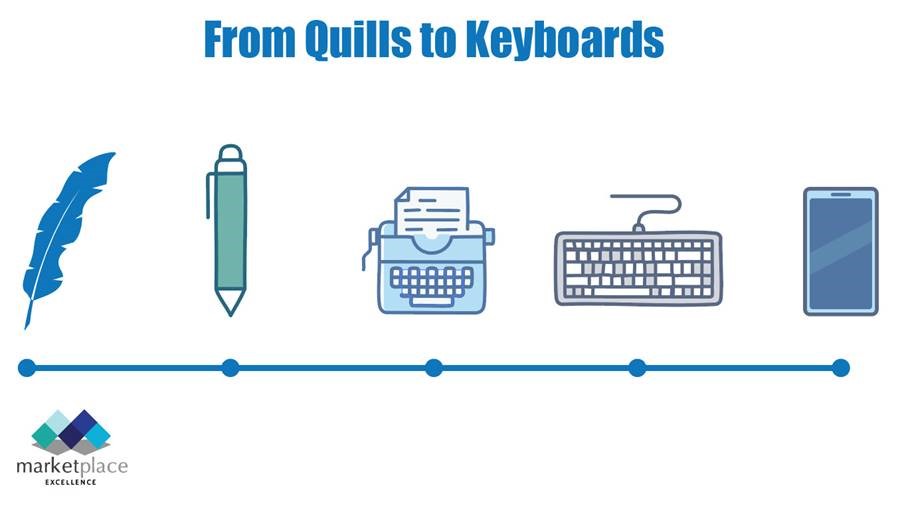
I began my career when content meant words scribbled in longhand by a secretary, or shorthand squiggles that only a trained eye could decode. The typewriter sharpened output but demanded precision, and every mistake cost time. Word processors, the Internet, laptops and smartphones liberated us, placing editing power at our fingertips and shrinking entire offices into portable briefcases.
Then came tablets and apps, unlocking a new mobility and immediacy. Suddenly, presentations, reports and speeches could be drafted, shared and revised on the move — instantly accessible across the globe. Today, artificial intelligence pushes the boundaries even further, generating analysis in seconds and suggesting strategies once reserved for human intuition.
Technology has steadily lightened the mechanical burden of production, allowing us to focus on the essence of communication: ideas that drive change. But the deeper lesson is about adaptability. Each new tool has required us to rethink not just how we work, but how we lead.
For those of us in governance — whether in corporate boardrooms or public institutions — this evolution carries an urgent message. If we do not embrace the tools of our age, we risk irrelevance. Caribbean nations, in particular, must ask themselves: how are we pivoting in this new era of content and technology? How serious are we about equipping our governments, our industries and our youth to thrive in the digital age?
The stakes are high. Tourism, our economic lifeblood, competes on global platforms where perception, speed and innovation matter more than ever. Governance structures must be nimble, responsive and informed by data, not weighed down by outdated methods. The printing press once transformed nations — today, it is AI, digital platforms, and the mastery of content that will determine who rises and who falls.
The journey from quills to keyboards — and now to algorithms — is not just a personal reflection. It is a call to action. Progress will not wait. The question is: will we?
(Dr. Basil Springer, GCM, is a corporate governance adviser. He may be reached at basilgf@marketplaceexcellence.com. His columns are archived at www.nothingbeatsbusiness.com.)